Thermocouple
A thermocouple is a sensor that measures temperature. It consists of two different types of metals, joined together at one end. When the junction of the two metals is heated or cooled, a voltage is created that can be correlated back to the temperature.
Omika thermocouple range :
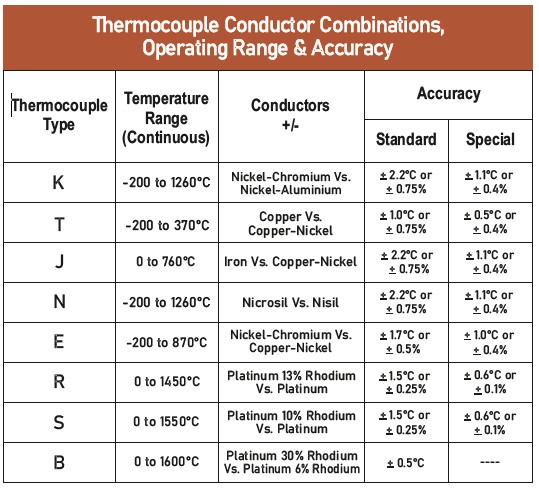
- Base metal thermocouples (K, J, T, E, N)
- Noble metal thermocouples (R, S, B)
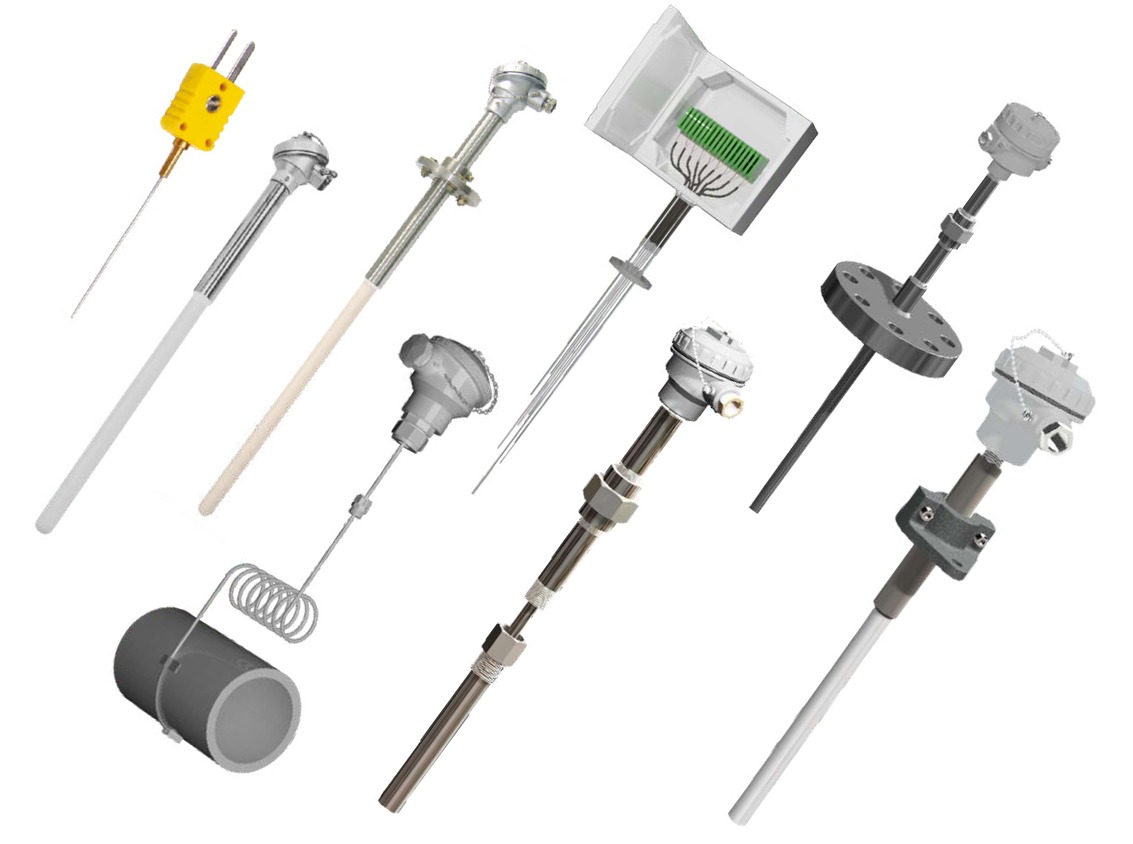
- Special thermocouples on customer requirements.
Thermocouples are available in both class 1 and class 2 as per IEC 60584 and some standard and special classes in accordance with ASTM.
How to select right thermocouple :
A thermocouple is a simple, robust and cost-effective temperature sensor used in a wide range of temperature measurement processes. The following criteria are used in selecting a thermocouple:
- Temperature range
- Chemical resistance of the thermocouple or sheath material
- Installation requirements
Junction type of thermocouple :
Sheathed thermocouple probes are available with one of three junction types:
Grounded junction : the thermocouple wires are physically attached to the inside of the probe wall. This results in good heat transfer from the outside, through the probe wall to the thermocouple junction.
Ungrounded junction : the thermocouple junction is detached from the probe wall. Response time is slower than the grounded style, but the ungrounded offers electrical isolation.
Exposed junction : The thermocouple junction extends beyond the protective metallic sheath to give accurate fast response. The sheath insulation is sealed where the junction extends to prevent penetration of moisture or gas which could cause errors.
Thermocouple Specification
| Type | MI Type / Non MI Type |
| Configuration | Simplex / Duplex / Triplex or on request |
| Sheath Material | SS316, SS310, Inconel 600, HRS446, Pyrosil etc. |
| Enclosure Material | Die cast / SS316 / SS304 |
| Enclosure Approval | CCOE / ATEX / IP etc. |